As architect and interior designer take center stage, this passage beckons readers into a world crafted with good knowledge, ensuring an absorbing and original reading experience. The intricate dance between form and function, aesthetics and practicality, is what defines the captivating realm of architecture and interior design.
From envisioning grand structures to transforming everyday spaces, these professionals play a pivotal role in shaping the environments we inhabit. Let's delve into the multifaceted world of architects and interior designers, exploring their roles, design processes, collaboration efforts, and more.
Roles and Responsibilities
An architect plays a crucial role in a building project by designing and planning the overall structure of a building. They are responsible for creating detailed drawings, blueprints, and specifications that guide the construction process. Architects work closely with clients to understand their needs, budget, and aesthetic preferences to create a functional and visually appealing design.Interior designers, on the other hand, focus on enhancing the interior spaces of a building.
Their responsibilities include selecting color schemes, furniture, lighting, and decorative elements to create a cohesive and aesthetically pleasing environment. Interior designers work closely with architects to ensure that the interior design aligns with the overall architectural vision while meeting the client's needs and preferences.
Comparison of Tasks
- Architects focus on the overall structure and exterior design of a building, while interior designers specialize in enhancing the interior spaces.
- Architects create detailed plans and drawings for the entire building, including the layout, materials, and structural elements, while interior designers focus on selecting furnishings, finishes, and decorative elements for specific rooms.
- Architects work on zoning regulations, building codes, and structural integrity, while interior designers prioritize functionality, comfort, and aesthetics within the interior spaces.
- Both architects and interior designers collaborate closely to ensure that the overall design of a building harmonizes with the interior spaces, creating a cohesive and visually appealing environment for occupants.
Education and Training
Becoming an architect or interior designer requires a specific educational path and training to acquire the necessary skills and knowledge in the field.
Architect Educational Path
To become an architect, aspiring individuals typically follow these steps:
- Obtain a Bachelor's degree in Architecture from an accredited university or college. This undergraduate program usually takes 5 years to complete and provides a solid foundation in architectural principles and design.
- Complete a Master's degree in Architecture for further specialization and in-depth knowledge. This advanced degree program can take an additional 2 to 3 years.
- Participate in an internship or work experience under a licensed architect to gain practical skills and real-world experience.
- Pass the Architect Registration Examination (ARE) to become a licensed architect.
Interior Designer Training
The process of becoming a certified interior designer involves the following steps:
- Attain a Bachelor's degree in Interior Design, Interior Architecture, or a related field from an accredited institution. This undergraduate program typically lasts for 4 years and covers topics such as space planning, color theory, and materials.
- Complete a certification program or obtain a license by passing the National Council for Interior Design Qualification (NCIDQ) exam. This exam assesses the knowledge and skills required to practice as a professional interior designer.
- Participate in internships or apprenticeships to gain hands-on experience and build a portfolio of work.
Comparison of Academic Requirements
Architects and interior designers have distinct academic paths, with architects typically undergoing longer and more specialized education. While both professions require a Bachelor's degree, architects often pursue a Master's degree for further expertise. Interior designers, on the other hand, focus on specific design aspects and must pass the NCIDQ exam to become certified professionals.
Design Process
In the field of architecture and interior design, the design process is a crucial aspect that guides professionals in creating innovative and functional spaces. Let's delve into the typical design process followed by architects and interior designers.
Architects Design Process
Architects follow a systematic approach to design that involves several key steps:
- Programming: Understanding the client's needs and project requirements.
- Schematic Design: Developing initial design concepts and sketches.
- Design Development: Refining the design, incorporating structural and mechanical systems.
- Construction Documents: Creating detailed drawings and specifications for construction.
- Bidding and Negotiation: Obtaining cost estimates and selecting a contractor.
- Construction Administration: Overseeing the construction process to ensure the design intent is realized.
Interior Design Concept Creation
Interior designers also follow a structured design process to bring their vision to life:
- Concept Development: Generating ideas and themes for the space based on client preferences.
- Space Planning: Determining the layout and functionality of the interior space.
- Material Selection: Choosing finishes, furniture, and decor elements that align with the design concept.
- Lighting Design: Creating a lighting scheme that enhances the ambiance and functionality of the space.
- Design Presentation: Presenting the final design concept to the client for approval.
Comparison of Design Approaches
While architects focus on the overall structure and form of a building, interior designers concentrate on the aesthetics and functionality of interior spaces
Software and Tools
When it comes to creating stunning designs and models, architects and interior designers rely on a range of software and tools to bring their visions to life. Let's take a closer look at the essential software used by architects for design and modeling, the various tools utilized by interior designers in space planning, and how digital tools are commonly employed by both professionals.
Software Used by Architects
- AutoCAD: Widely used for creating precise 2D and 3D drawings, architectural drafting, and documentation.
- Revit: Ideal for Building Information Modeling (BIM) to design, visualize, and collaborate on complex building projects.
- SketchUp: Great for creating conceptual designs and quick 3D models for architectural presentations.
- Rhino: Known for its advanced modeling capabilities, especially for complex shapes and forms.
Tools Utilized by Interior Designers
- Space Planning Software: Tools like SketchUp, AutoCAD, and Floorplanner are commonly used for laying out furniture and fixtures in interior spaces.
- Color Palette Generators: Online tools and apps help interior designers choose color schemes that complement each other.
- Virtual Reality (VR) Headsets: Used for immersive experiences and virtual walkthroughs of interior design concepts.
- Lighting Design Software: Programs like Dialux and AGi32 help interior designers simulate and plan lighting schemes for optimal ambiance.
Digital Tools for Architects and Interior Designers
- Adobe Creative Suite: Both architects and interior designers use programs like Photoshop and Illustrator for graphic design and visual presentations.
- Project Management Software: Tools like Trello, Asana, or Monday.com help professionals stay organized and manage their design projects efficiently.
- Rendering Software: Programs like V-Ray and Lumion are essential for creating realistic visualizations of architectural and interior design projects.
- Collaboration Platforms: Architects and interior designers often use platforms like Dropbox, Google Drive, or BIM 360 for seamless collaboration and file sharing.
Collaboration and Communication
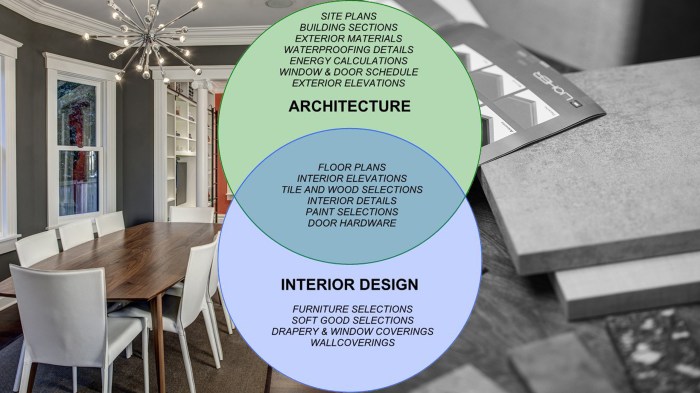
Effective collaboration and communication between architects and interior designers are crucial for the success of a project. By working together seamlessly, they can create spaces that are not only aesthetically pleasing but also functional and practical.
Importance of Collaboration
Collaboration allows architects and interior designers to combine their expertise and creativity to develop cohesive designs that meet the client's needs and vision. By sharing ideas and perspectives, they can address challenges and find innovative solutions that enhance the overall quality of the project.
- Collaboration ensures that the architectural elements and interior design concepts are harmoniously integrated, creating a unified and cohesive space.
- It helps in optimizing the use of space, materials, and resources, leading to efficient and cost-effective solutions.
- Collaboration also fosters a holistic approach to design, considering both the structural and aesthetic aspects of a space.
Effective Communication Strategies
Communication is key to successful collaboration between architects and interior designers. Clear and open communication helps in aligning goals, resolving conflicts, and ensuring that everyone is on the same page throughout the design process.
- Regular meetings and brainstorming sessions allow for the exchange of ideas and feedback, fostering a collaborative environment.
- Utilizing digital tools and platforms for sharing documents, designs, and updates can streamline communication and keep everyone informed in real-time.
- Establishing clear roles and responsibilities for each team member helps in avoiding misunderstandings and ensures accountability.
Examples of Successful Projects
One notable example of successful collaboration between architects and interior designers is the renovation of the Louvre Museum in Paris. The seamless integration of architectural elements with interior design concepts resulted in a revitalized space that not only preserved the historical significance of the museum but also enhanced the visitor experience.Another example is the Apple Park campus designed by Foster + Partners in collaboration with Apple's design team.
The synergy between architecture and interior design created a futuristic and sustainable workspace that reflects Apple's innovative spirit and brand identity.Overall, effective collaboration and communication between architects and interior designers are essential for achieving design excellence and delivering exceptional spaces that exceed client expectations.
Outcome Summary
In conclusion, architects and interior designers stand as the visionary creators who bridge the gap between imagination and reality. Their innovative designs and seamless collaboration bring forth spaces that inspire, uplift, and resonate with the essence of those who dwell within.
As we navigate through the intricacies of architecture and interior design, we are reminded of the profound impact these professionals have on our daily lives, enriching our surroundings with beauty and functionality.
FAQ Summary
What is the main role of an architect in a building project?
An architect is responsible for designing the overall structure of a building, including its aesthetics, functionality, and safety considerations.
What are the key responsibilities of an interior designer in enhancing spaces?
An interior designer focuses on creating interior spaces that are visually appealing, functional, and reflective of the client's needs and style preferences.
How do architects and interior designers typically collaborate in a construction project?
Architects focus on the overall building design, while interior designers work on enhancing the interior spaces to complement the architectural vision, ensuring a harmonious blend of aesthetics and functionality.