Delving into the world of slate roofing pros and cons, this article aims to provide a comprehensive look at the benefits and drawbacks of this roofing material. From durability to aesthetics, we cover it all in a casual formal language style that aims to inform and engage readers.
As we navigate through the details of slate roofing, you'll gain insights into its eco-friendly aspects, maintenance requirements, and more.
Pros of Slate Roofing
Slate roofing offers several advantages that make it a popular choice for homeowners looking for a long-lasting and visually appealing roofing option.
Durability of Slate Roofing
Slate roofing is known for its exceptional durability, lasting for over 100 years when properly maintained. This longevity makes it a cost-effective option in the long run, as it eliminates the need for frequent replacements.
Aesthetic Appeal of Slate Roofing
One of the key benefits of slate roofing is its natural beauty and timeless elegance. The unique texture and color variations of slate tiles can enhance the curb appeal of any home, adding a touch of sophistication and charm.
Eco-Friendly Aspects of Using Slate for Roofing
Slate is a natural, environmentally friendly material that is mined from the earth and requires minimal processing. Its long lifespan means reduced waste and fewer resources used over time, making it a sustainable choice for eco-conscious homeowners.
Styles and Colors Available in Slate Roofing
Slate roofing comes in a variety of styles, shapes, and colors to suit different architectural preferences and design aesthetics. Whether you prefer traditional gray slate or more vibrant hues like green or purple, there is a slate option to complement any home style.
Cons of Slate Roofing
Installing slate roofing can come with a set of disadvantages that homeowners should consider before making a decision. Let's explore some of the drawbacks associated with slate roofing.
High Cost of Installation
Slate roofing is known for its high upfront cost compared to other roofing materials. The quality and durability of slate come at a price, making it a significant investment for homeowners looking to install a new roof.
Weight and Impact on Structure
One of the key concerns with slate roofing is its weight. Slate is a heavy material, and not all buildings are structurally equipped to support the added load. Reinforcements may be necessary to ensure the building can withstand the weight of a slate roof.
Maintenance Requirements
Slate roofing requires regular maintenance to prolong its lifespan and ensure its effectiveness. From replacing broken tiles to repairing flashing, the maintenance of slate roofing can be time-consuming and costly for homeowners.
Limited Availability of Roofers
Finding skilled slate roofers for repairs and installations can be challenging due to the specialized nature of working with slate. Homeowners may face delays in getting necessary repairs or struggle to find professionals with the expertise to work with slate roofing.
Comparing Slate Roofing to Other Roofing Materials
When considering roofing materials for your home, it's essential to compare slate roofing with other common options to make an informed decision.
Longevity
One of the standout features of slate roofing is its exceptional longevity. While asphalt shingles typically last 20-30 years, slate roofs can easily surpass 100 years with proper maintenance and care. In comparison to metal roofing, which lasts around 50 years, slate roofing stands out as a durable and long-lasting option.
Energy Efficiency
Slate roofing is known for its natural insulating properties, helping to regulate indoor temperatures and reduce the energy needed for heating and cooling. This makes slate roofs more energy-efficient compared to materials like metal or asphalt shingles, which may require additional insulation to achieve the same level of efficiency.
Environmental Impact
When it comes to environmental impact, slate roofing shines as a sustainable choice
Installation Process
The installation process for slate roofing differs significantly from other materials like asphalt shingles or metal. Slate tiles are heavier and require a specialized installation technique by experienced professionals. While the upfront cost and labor for slate roofing installation may be higher, the long-term benefits and durability make it a worthwhile investment for many homeowners.
Design and Installation Considerations for Slate Roofing
When it comes to designing and installing a slate roof, there are several important considerations to keep in mind to ensure a successful and long-lasting outcome. From enhancing curb appeal to proper maintenance, every step plays a crucial role in the overall performance of your slate roof.
Tips for Designing a Slate Roof
- Consider the architectural style of your home and choose a slate color and pattern that complements it.
- Opt for high-quality slate tiles to ensure durability and longevity.
- Incorporate decorative elements like copper flashing or finials to enhance the aesthetics of your roof.
Steps for Installing a Slate Roof
- Start by preparing the roof deck and underlayment to provide a solid foundation for the slate tiles.
- Carefully lay each slate tile in the chosen pattern, ensuring proper overlap and alignment for maximum protection against the elements.
- Secure the tiles in place with copper nails or hooks to prevent them from shifting or loosening over time.
Importance of Hiring Experienced Professionals
- Experienced roofing professionals have the necessary skills and expertise to handle the intricacies of slate roof installation, ensuring a high-quality and reliable result.
- Professional roofers can identify potential issues early on and address them effectively to prevent costly repairs down the line.
- By hiring experts, you can rest assured that your slate roof will be installed correctly and maintain its integrity for years to come.
Maintenance and Care for a Slate Roof
- Regularly inspect the roof for any damaged or missing slate tiles and replace them promptly to prevent water leaks and structural damage.
- Clean the roof surface periodically to remove debris and prevent moss or algae growth, which can compromise the integrity of the slate tiles.
- Consider applying a protective sealant to the slate tiles to enhance their durability and resistance to weathering over time.
End of Discussion
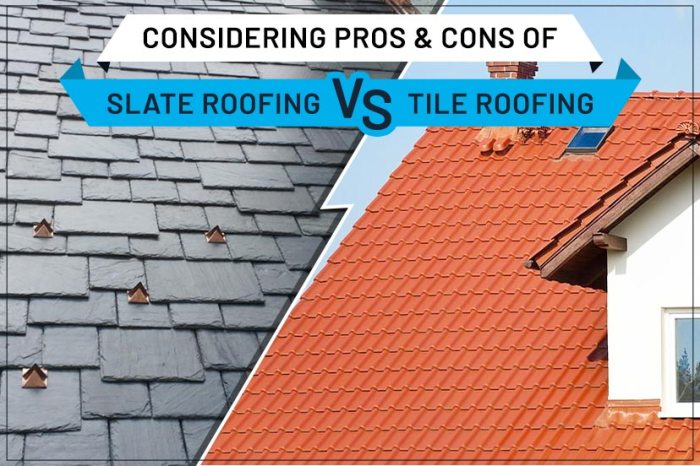
Concluding our discussion on slate roofing pros and cons, we have uncovered the key points that homeowners should consider when opting for this unique roofing material. From design considerations to installation tips, we've covered it all to help you make an informed decision.
Question & Answer Hub
What is the average lifespan of a slate roof?
The durability of slate roofing can lead to a lifespan of 75 to 100 years, making it a long-lasting choice for homeowners.
Does slate roofing require a lot of maintenance?
While slate roofing is durable, it does require regular inspections and minor repairs to ensure its longevity.
Are there any eco-friendly aspects of using slate for roofing?
Yes, slate is a natural material that can be recycled and has a low environmental impact compared to other roofing materials.